n today’s built environments, the focus is increasingly on creating spaces that enable efficient movement, controlled conditions, and seamless access. As a result, automatic sliding doors have become a common feature across healthcare facilities, commercial buildings, and specialized environments. These systems are part of a broader shift towards touchless entrance solutions and smart entry solutions, where infrastructure supports both functionality and user convenience.
Automatic sliding door systems are designed to open and close through sensor-based activation, allowing movement without physical contact. This feature makes them suitable for spaces with high footfall, as well as environments where controlled access and minimal manual interaction are required.
Understanding Automatic Door Systems in Modern Infrastructure
An automatic door system is engineered to facilitate smooth and controlled entry and exit. In the case of sliding doors, the mechanism operates horizontally, allowing the door panels to move along a track. This design supports efficient space utilization and enables uninterrupted flow of movement, especially in areas where conventional hinged doors may not be practical.
These systems are commonly integrated with motion sensors, radar sensors, or control panels, allowing the door to respond to approaching users. In many applications, automatic sliding doors are also connected to broader building systems, making them part of a coordinated approach to smart entry solutions.
Across different sectors, these doors are used not only for access but also as part of operational planning, where movement between spaces needs to be managed in a structured manner.
The Role of Touchless Entrance in Everyday Spaces
The concept of a touchless entrance is based on reducing the need for physical interaction at entry points. Automatic sliding doors support this by allowing users to pass through without using handles or manual force. In environments such as hospitals, laboratories, or commercial facilities, this type of entry can support smoother transitions between areas.
Touchless operation is particularly relevant in spaces where multiple users interact with the same infrastructure throughout the day. By minimizing manual contact, automatic door systems contribute to maintaining cleaner access points and more efficient circulation within the building.
In addition, touchless entrance systems are often designed to respond quickly and consistently, ensuring that access remains uninterrupted even during peak usage.
Application in Healthcare and Controlled Environments
Automatic sliding doors are widely used in healthcare settings, where infrastructure must align with strict operational requirements. Within hospitals, these doors are commonly installed in areas such as operating rooms, intensive care units, laboratories, and diagnostic spaces.
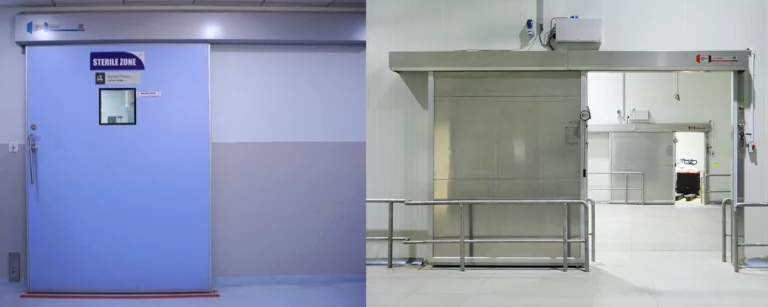
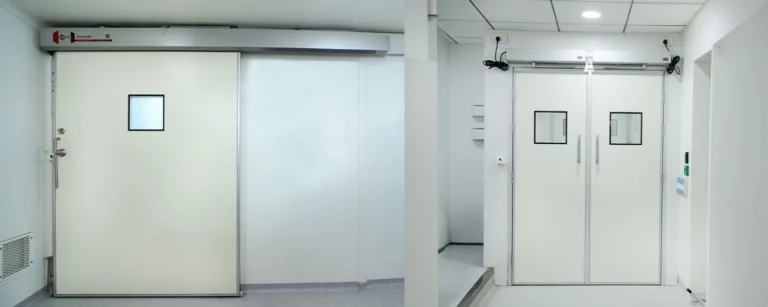
In such environments, doors are not only used for access but also as part of maintaining controlled conditions. Hermetically sealed sliding doors are designed to create a defined separation between spaces, supporting pressure regulation and limiting the transfer of air between different zones.
These door systems are engineered with features such as airtight sealing, smooth surfaces, and precise movement, making them suitable for spaces where environmental control is essential. Their application in healthcare demonstrates how automatic door systems can be integrated into critical infrastructure without disrupting workflow.
Use in Commercial and High Traffic Spaces
Beyond healthcare, commercial doors with automatic sliding functionality are widely used in office buildings, retail spaces, airports, and other high traffic environments. In these settings, the focus is on ensuring smooth and continuous movement of people while maintaining an organized flow of entry and exit.
Sliding door systems allow for wider openings compared to traditional doors, making them suitable for areas with large volumes of movement. Their automated operation also helps manage access without requiring constant manual intervention.
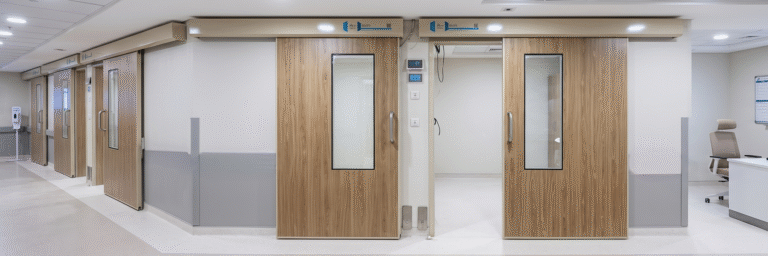
In commercial environments, automatic sliding doors are often part of a larger design approach, where both functionality and visual consistency are considered. With options for different finishes and configurations, these systems can be adapted to match the architectural requirements of the space.
Integration with Smart Entry Solutions
As buildings continue to adopt integrated systems, automatic sliding doors are increasingly aligned with smart entry solutions. These solutions involve the use of sensors, access control systems, and programmable settings to manage how and when doors operate.
For example, door systems can be configured to respond differently based on time, access permissions, or environmental conditions. This level of control allows building operators to manage entry points more effectively while maintaining a consistent user experience.
In certain applications, automatic doors are also connected to safety systems, ensuring coordinated operation during specific scenarios. This integration highlights the role of automatic sliding doors as part of a broader infrastructure ecosystem rather than standalone components.
Design Flexibility and Customization
Automatic sliding door systems are available in multiple configurations to suit different project requirements. Depending on the application, doors can be customized in terms of size, material, finish, and additional features.
In healthcare environments, doors may include options such as radiation protection, sound reduction, or hermetic sealing. In commercial spaces, customization may focus on aesthetics, transparency, and integration with building design.
This flexibility allows automatic door systems to be used across a wide range of sectors, ensuring that they align with both functional and architectural needs. The ability to adapt these systems to specific requirements makes them a practical choice for modern infrastructure projects.
Supporting Efficient Movement and Space Utilization
One of the key aspects of sliding door systems is their ability to support efficient use of space. Since the door panels move along a track rather than swinging open, they require less clearance, making them suitable for areas with limited space.
Their operation is typically designed to be smooth and controlled, which supports continuous movement without disruption. In environments where timing and coordination are important, such as hospitals or busy commercial areas, this consistency plays a significant role.
Automatic sliding doors also contribute to reducing bottlenecks at entry and exit points, helping maintain an organized flow of people within the building.
Conclusion
The adoption of automatic sliding doors reflects a broader shift towards touchless entrance systems, commercial doors with enhanced functionality, and integrated smart entry solutions. These systems are increasingly being incorporated into modern buildings to support seamless access, controlled environments, and efficient movement.
Across healthcare, commercial, and specialized spaces, automatic door systems are aligned with the evolving needs of infrastructure, where every component plays a role in overall performance. As buildings continue to adapt to changing requirements, automatic sliding doors remain an integral part of creating environments that are both functional and responsive.