






Information
Standards for fire-resistant doors
Fire-resistant doors are subject to increasingly strict regulatory requirements. Within Europe, fire resistance is assessed according to EN 1634-1, which tests the door system for integrity (E), insulation (I) and, where applicable, radiation (W).
In the Netherlands, this standard has replaced earlier national classifications such as NEN 6069.
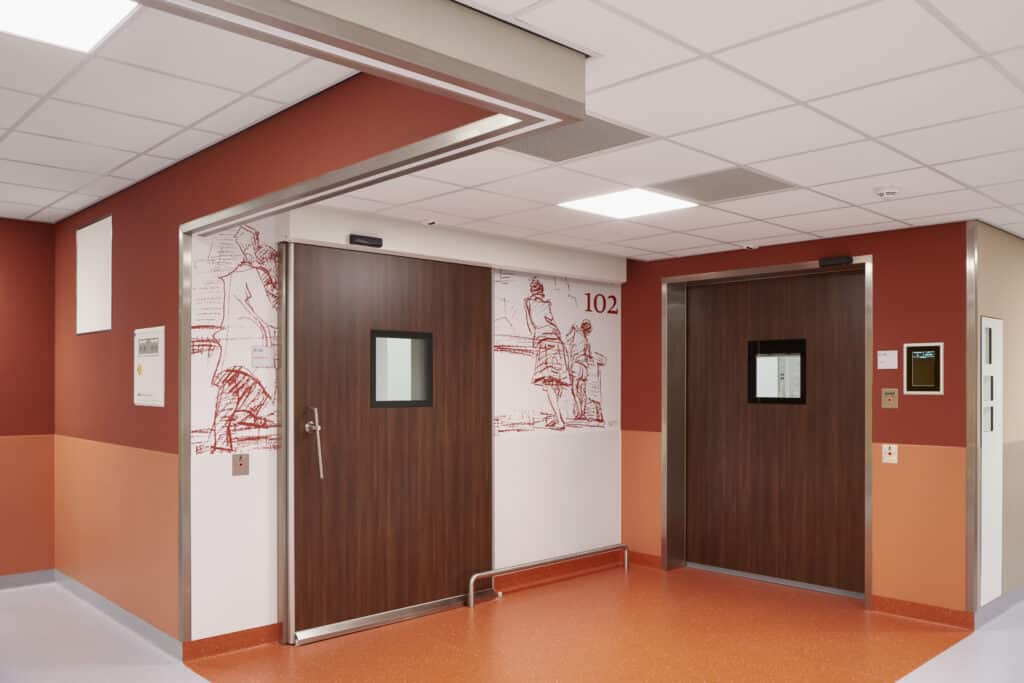
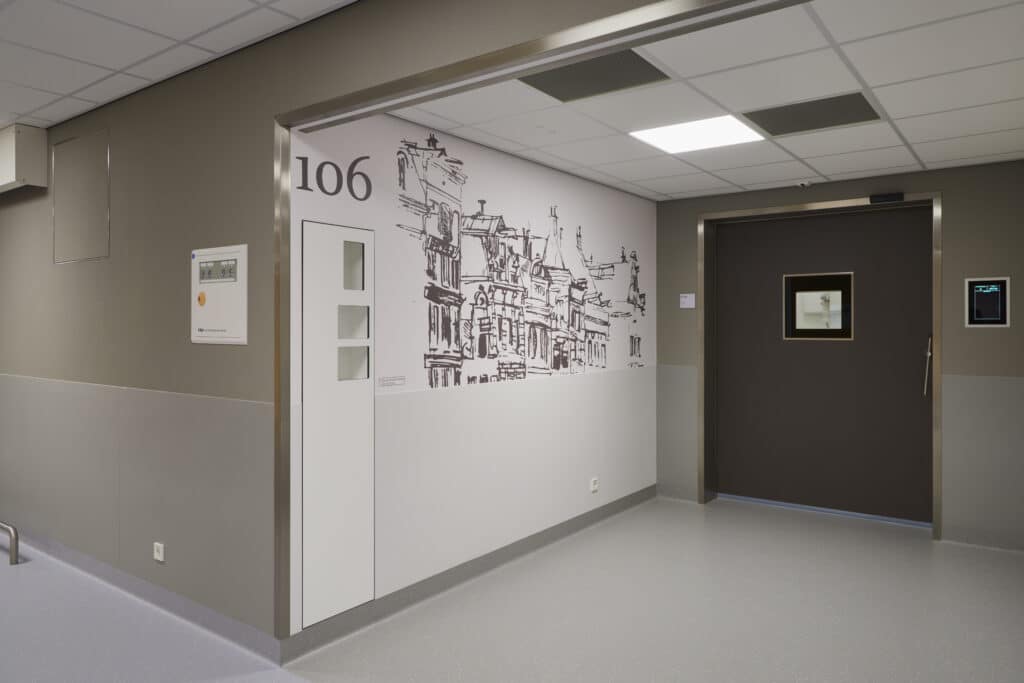
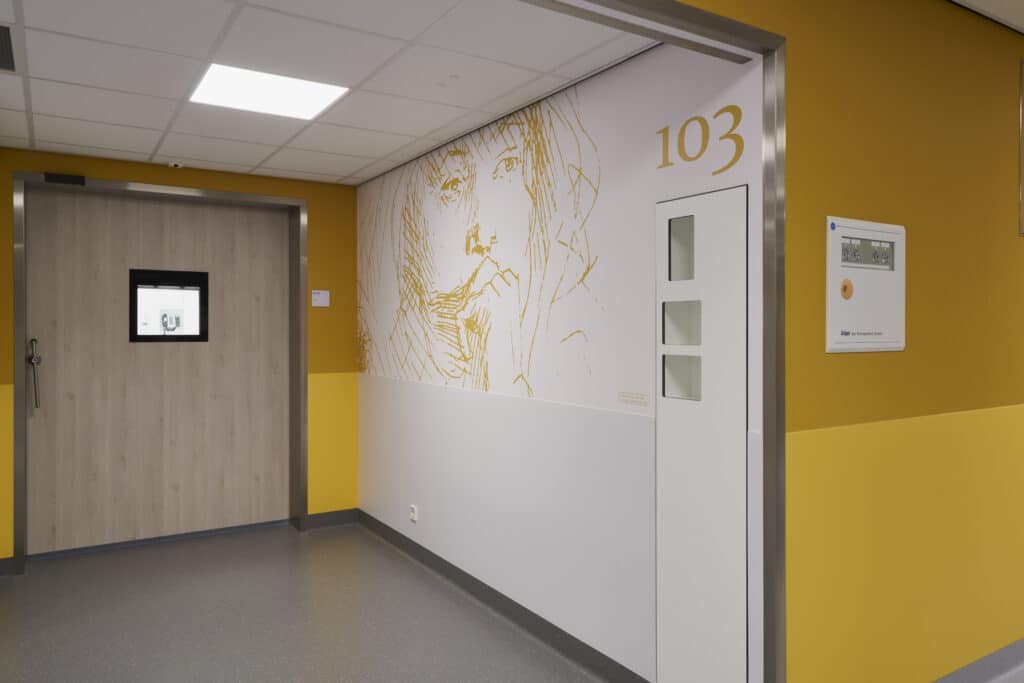
Metaflex has developed fire-resistant sliding door systems that meet the EI1 classification for 30 and 60 minutes. This classification confirms that the door limits both the spread of fire and heat transfer for the specified duration, under standardised test conditions.
Key features of fire-resistant sliding doors
Metaflex fire-resistant doors are designed to combine fire performance with functional use in daily operations. Depending on the application, the doors can be specified with the following characteristics:
-
Fire resistance classifications of 30 or 60 minutes
-
EI1 performance level
-
Available with or without fire-resistant glass
-
Designed as sliding fire-resistant doors
-
Suitable for automatic operation
Automatic sliding fire-resistant doors
In the past, fire-resistant doors were often required to remain closed, limiting their suitability for daily use. With automated sliding fire-resistant doors, this limitation is reduced.
By integrating automation, fire-resistant sliding doors can remain accessible during normal operation while still fulfilling their fire-safety function when required. This allows fire compartmentation to be combined with controlled movement and practical use in environments such as healthcare facilities, laboratories and industrial buildings.
Downloads


Doors

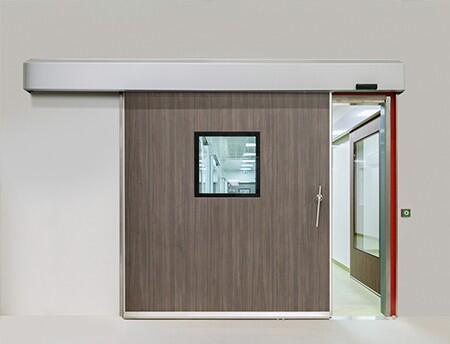


Metaflex Medicare EI1
- 30 and 60 minutes fire-resistant
- Can be made radiation-proof
- Airtight/hermetically sealing
Blog posts

The need for Hermetic Sliding Doors
16 Nov 2023
Metaflex presents modernised fire door
17 May 2022
